

How to Build a Luxury Men’s Brand That Can Charge More (and Keep Charging More)
- February 14, 2026
- Blog

The luxury menswear market isn’t small—and it’s not slowing down the way people assume. Global luxury menswear was valued at about $26.3B in 2024 and is projected to grow at about 5.1% CAGR through 2030.
But the bigger luxury picture is where the pressure is: Bain and Altagamma peg total luxury spending at €1.44T in 2025 (flat to slightly down vs. 2024), with personal luxury goods forecast at €358B. And profitability has taken a real hit—operating margins fell to ~15–16% in 2025, down from 21% in 2022, driven by inflation, markdowns, tariffs, and cost pressure.
Now add the part most founders don’t want to admit: discounting has crept into “luxury” at scale. The Financial Times reported up to 40% of luxury goods sold at a discount in 2025, the highest level in more than a decade outside the pandemic.
That’s the environment you’re building in.
So if you’re building a luxury men’s brand in 2026, you’re not just trying to look premium. You’re engineering pricing power—and protecting it from the two things that ruin it fast: weak positioning and promo addiction.
Here’s the playbook that holds up when the market gets selective.
1) Anchor Everything to Pricing Power (Not Volume)
McKinsey’s luxury analysis is blunt: more than 80% of luxury growth from 2019–2023 came from price increases, not volume.
That worked—until it didn’t.
Bain notes the consumer base is contracting: the industry lost ~20 million luxury consumers in 2025 as people bought less often, traded down, shifted to experiences, or moved to pre-owned. That’s the opposite of a “just scale volume” environment.
Actionable move: build a one-page Pricing Power Plan before you scale anything.
- Buyer-stated reasons to pay full price: not your reasons; the customer’s reasons they’d repeat to someone else.
- Proof points: third-party validation, craftsmanship specifics, materials, origin, performance characteristics, fit system, production limits.
- Price-defense narrative: a short, repeatable “why” that doesn’t sound defensive.
If your plan is basically “better quality” and “premium,” you don’t have pricing power. You have a hope.
2) Enforce Price Integrity Ruthlessly (Because Discounting Trains Your Customer)
When discounting becomes normal, the customer learns a behavior: wait. And once they learn it, your margins become optional.
Bain is already calling out markdown pressure as part of what pushed margins back down to 2009-level profitability.
Rules that protect luxury pricing (and keep you out of the promo trap):
- No public promo calendar.
- No sitewide discounts.
- If you must clear inventory: do it quietly (private client list, VIP access, discontinued SKUs only).
- Replace discounts with non-price value:
- bundles that keep list price intact
- limited capsules with real constraints
- access perks (early drops, private releases, member-only product pages)
If you’re selling “luxury” and you’re constantly negotiating with the buyer through coupons, you’re building a mid-market brand with expensive photography. — Blanc Sovereign
3) Engineer a Product Ladder (Entry ? Core ? Icon)
One hero product is a trap. It forces you to chase revenue through promos when demand dips.
Build a ladder on purpose:
Entry: Lower-friction first purchase that introduces the brand
Core: The margin engine—repeatable, daily-use, reorder-friendly
Icon: The status anchor that makes the brand feel inevitable
Bain’s 2025 results show performance is polarized (only ~40–45% of brands reported positive growth). In a polarized market, the Icon matters because it creates gravity—without you buying attention every day.
Actionable move: assign KPIs per rung.
- Entry: email capture rate, first-purchase conversion, CAC tolerance
- Core: contribution margin, repeat rate by cohort, return rate
- Icon: branded search lift, PR/influencer pickup, waitlist rate, share of full-price sales
4) Build Scarcity That’s Structural (Not Theater)
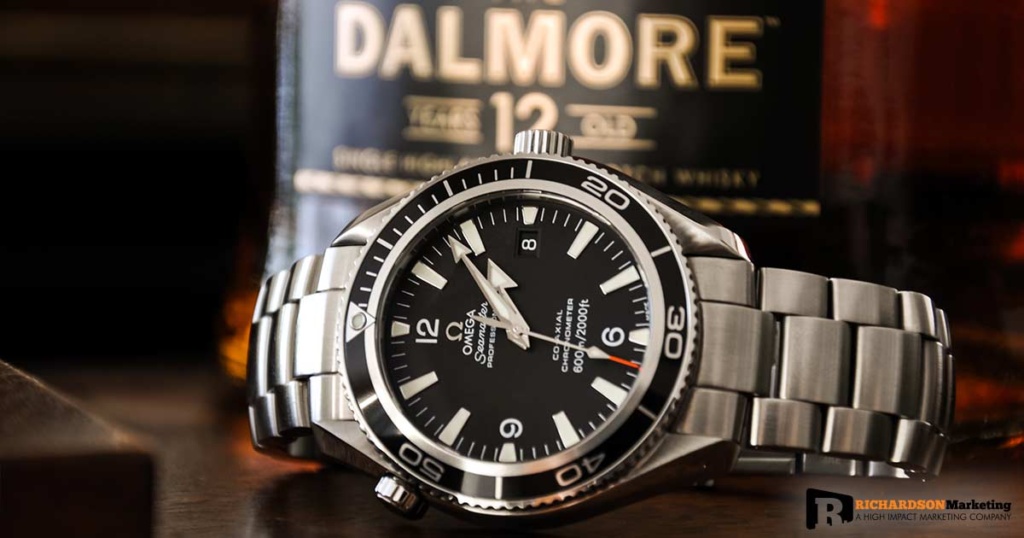
Scarcity is not a countdown timer. Real luxury scarcity is designed into operations and distribution.
If you need the strategic framing, HBR has covered how luxury brands “manufacture” scarcity in digital environments—meaning the system creates exclusivity, not the copywriting.
Scarcity mechanics that actually work:
- numbered runs with a public cap
- controlled restock cadence (and sticking to it)
- client-list access for new drops
- selective wholesale (or none)
- refusing mass marketplaces that flatten perception
If anyone can get anything anytime, your price becomes negotiable. Negotiable is not luxury.
The Risk of Overexposure: Why Too Much Visibility Kills Luxury
Luxury depends on distance.
For exclusivity to create aspiration, it has to remain exclusive. The moment a brand becomes omnipresent—posting constantly, replying to every comment, chasing every trend—the psychological gap that creates desire starts to close.
And when the gap closes, pricing power weakens.
Research in the Journal of Brand Management draws an important distinction between natural rarity and virtual rarity. Natural rarity is rooted in real constraints—craftsmanship, limited production, specialized materials, time-intensive processes. It strengthens emotional attachment and status signaling because it feels earned.
Virtual rarity is different. Endless “limited drops,” hype-driven countdowns, artificial scarcity tactics. These create attention spikes, but over time they dilute prestige. When everything is limited, nothing is.
Luxury brands that endure understand this distinction.
Look at how Burberry manages visibility online.
Its social presence is restrained. Confident. Quiet.
There’s no urgency language. No over-explanation. No defensive selling. A typical caption might read:
“Signature shapes, reworked for crisp winter walks and cosy pub afternoons.”
That tone carries a message without stating it directly:
If you recognize the signature, you’re in.
If you don’t, we’re not chasing you.
Even the lack of comment engagement reinforces positioning. The brand doesn’t need to jump into every conversation. Its authority doesn’t depend on responsiveness metrics.
Posting cadence reinforces this restraint. As Maxime Bicard of Versace noted when discussing social strategy, brands are moving away from the “post twice a day” mentality because frequency without intent weakens equity.
Two deliberate posts outperform twenty forgettable ones.
Overexposure trains the market to see you as accessible.
Accessibility erodes mystique.
Mystique supports margin.
5) Stop Running “Performance-Only” Marketing Like It’s a Flex

Luxury brands get addicted to performance dashboards, then panic when CAC rises, then discount to “fix ROAS,” and end up with an audience trained to buy only on promos.
WARC’s Multiplier Effect research is practical here: shifting from performance-heavy to a more balanced brand/performance approach can lift revenue ROI 25%–100% (with a reported median uplift), while over-investing in performance can reduce returns 20%–50%.
Actionable media guidance:
- Build a brand baseline (equity-driving creative) that runs consistently.
- Use performance to harvest demand, not to explain the brand.
- Evaluate beyond 7-day ROAS: branded search, repeat rate, email list growth, full-price share.
Performance is not the strategy. It’s the collection tool.
6) Track the KPIs That Predict Pricing Power
If you only track ROAS and CPA, you’ll eventually build the wrong buyer.
Track these instead:
- Full-price share (or discount rate)
- Price realization (net selling price vs. list)
- Branded search trend
- Repeat purchase rate (30/60/90-day cohorts)
- Owned-channel revenue share (email/SMS/direct)
- Return rate by SKU (fit and quality issues quietly destroy “luxury”)
Bain’s data shows the market is stabilizing, but the easy-growth era is over—brands have to defend desirability while protecting margin.
“If you have to convince people you’re premium, you already lost.” — Blanc Sovereign
The luxury men’s market isn’t collapsing. It’s correcting.
Easy growth from price hikes is gone. Aspirational buyers are more selective. Discounting is creeping up. Margins are under pressure.
That doesn’t kill strong brands.
It exposes weak ones.
If your “luxury strategy” is:
- high-end photos
- inflated MSRP
- Meta ads + promo codes
- influencer seeding without positioning
…you’re building a fragile business.
Real luxury brands are built on:
- pricing power you can defend without flinching
- distribution discipline
- structural scarcity
- margin math that works without sales
- brand equity that reduces CAC over time
When the market tightens, the brands with discipline keep their price. The ones built on hype start negotiating.
Luxury isn’t about charging more.
It’s about never needing to explain why you do.
Practical Implications for Luxury Men’s Brands
If you’re building in this category, the operational rules are simple:
- Reduce posting frequency. Increase intentionality.
- Avoid algorithm chasing. Build for brand consistency first.
- Don’t over-explain products. Specificity beats persuasion.
- Maintain controlled engagement. You are not a community manager brand.
- Limit artificial scarcity tactics. Build structural rarity instead.
Luxury social strategy is curation, not broadcasting.
Brands that understand this move at their own rhythm. They balance heritage with modern platforms without letting the platform dictate their identity.
About us and this blog
We are a full-service marketing company with a focus on helping our customers increase leads, sales, and conversions.
Request a free quote
Richardson Marketing is dedicated to helping our clients attract customers and increase sales.
Have a Question?
More from our blog
See all posts







Recent Posts
- How to Build a Luxury Men’s Brand That Can Charge More (and Keep Charging More) February 14, 2026
- Signal Strength: How Brands Stay Consistent as They Expand Across Social Media December 19, 2025
- 2025 Banking Marketing Performance Study December 7, 2025